
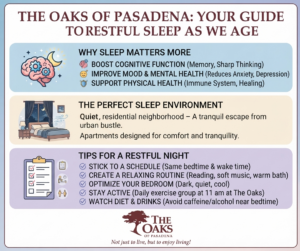
 We all know a good night’s sleep is essential for a productive day, but as we age, the quality and quantity of our sleep become even more critical to our overall health and well-being. At The Oaks of Pasadena, we understand that healthy sleep habits are a cornerstone of avibrant, independent lifestyle.
Why Sleep Matters More as We Age
It’s a common misconception that seniors need less sleep. In reality, while sleep patterns may change, the need for restorative sleep remains. A lack of quality sleep can affect everything from memory and mood to physical health. Adequate rest helps to:
- Boost Cognitive Function: Good sleep is crucial for memory consolidation and sharp thinking.
- Improve Mood and Mental Health: It helps regulate hormones that can impact our emotional state, reducing the risk of anxiety and depression.
- Support Physical Health: Restorative sleep strengthens the immune system, helps manage chronic conditions like diabetes and heart disease, and promotes physical healing.
Your Environment is Key to a Good Night’s Sleep
Creating a peaceful environment is one of the most effective ways to improve sleep. Our residents at The Oaks of Pasadena often tell us how much they appreciate our location. Nestled in a quiet, residential neighborhood, our community is a tranquil escape from the hustle and bustle of many urban settings. The absence of city noise and traffic allows for a truly restful night—and a peaceful nap whenever you need one!
Our apartments are designed for comfort and tranquility, giving you the perfect setting to establish a healthy sleep routine. Waking up feeling refreshed and energized makes all the difference in enjoying our vibrant community at The Oaks of Pasadena and the beautiful city of Pasadena.
7 Tips for Better Sleep
Beyond a peaceful environment, there are several habits seniors can adopt to improve their sleep quality:
- Stick to a Schedule: Try to go to bed and wake up around the same time each day. This helps regulate your body’s internal clock.
- Create a Relaxing Bedtime Routine: Wind down before bed with calming activities like reading, listening to soft music, or taking a warm bath or shower.
- Optimize Your Bedroom: Keep your bedroom dark, quiet, and cool. Consider blackout curtains, earplugs, or a white noise machine if needed.
- Limit Naps: While occasional short naps can be refreshing, long or late-afternoon naps can interfere with nighttime sleep.
- Watch Your Diet and Drinks: Avoid caffeine and alcohol, especially in the late afternoon and evening. A light snack before bed is fine, but heavy meals close to bedtime can cause discomfort.
- Stay Active: Regular physical activity during the day can significantly improve sleep quality. Just be sure to finish a few hours before bedtime. We offer a daily exercise group at 11 am here at The Oaks!
- Consult Your Doctor: If you consistently struggle with sleep, talk to your doctor. He or she can help identify any underlying medical conditions or medications that might be affecting your sleep.